
Why Business Awards Matter for Small Businesses (And How They Can Grow Your Brand)

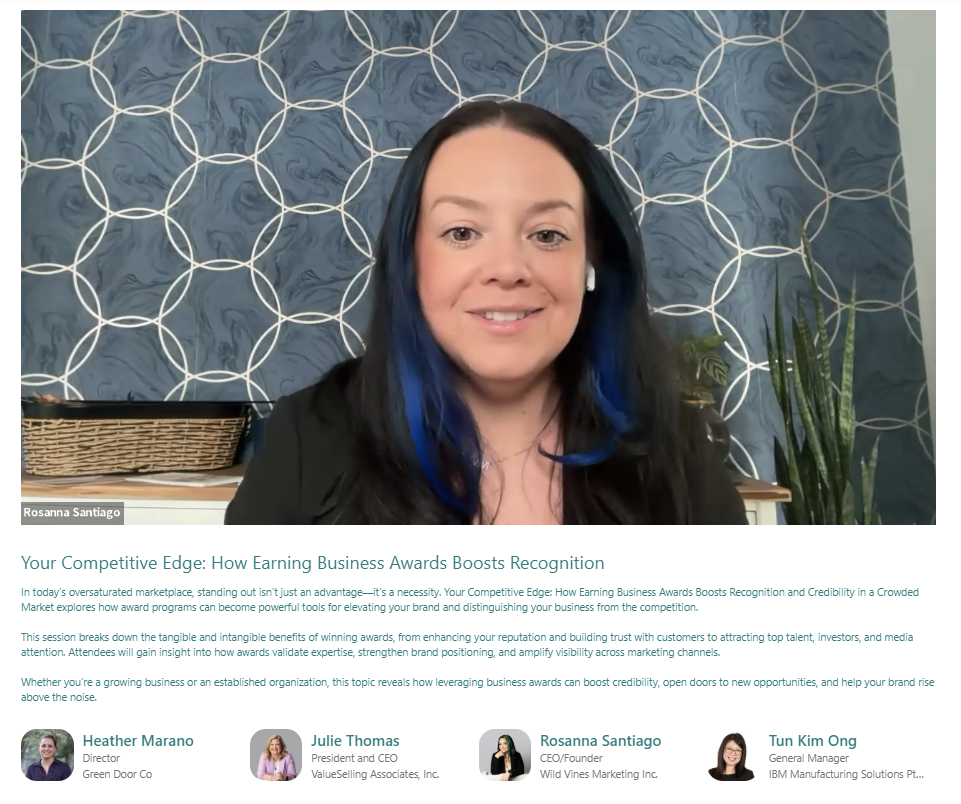

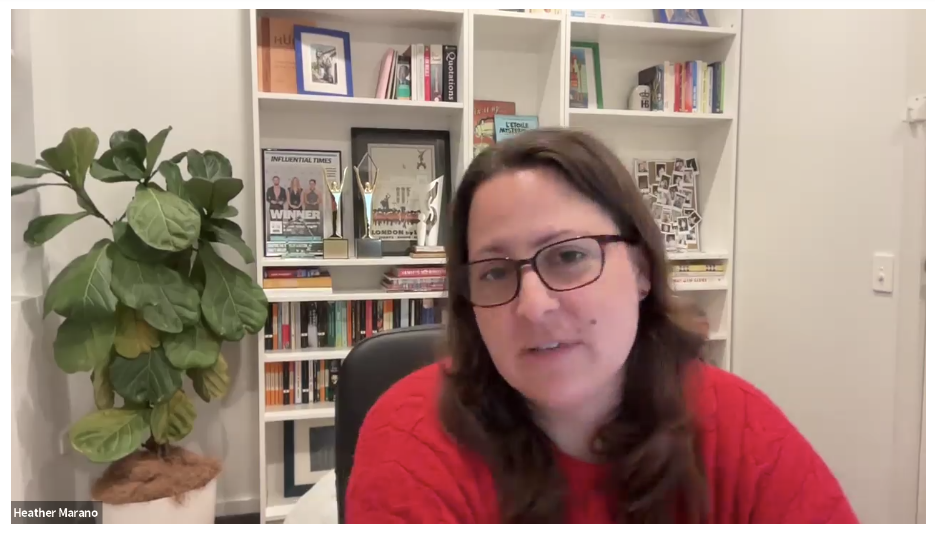
Your Competitive Edge: Lessons from the Stevie® Awards Women|Future Webinar
If you have ever wondered whether applying for a business award is actually worth the time, I think the answer is yes, especially for a small business that is working hard to build trust and stand out in a crowded market. Business awards can give you something your own marketing cannot create on its own: independent recognition from a third party that says your work is worth paying attention to.
That recognition can support your brand in a lot of practical ways. It can help potential customers feel more confident about choosing you, give your team something meaningful to celebrate, create new PR and speaking opportunities, and give you stronger proof points to use across your website, proposals, social media, email marketing, and sales conversations. The trophy is exciting, but the real value is what you do with the recognition after you receive it.
Why Business Awards Matter for Small Businesses
In July, I had the honor of serving as both a speaker and moderator for the Stevie® Awards Women|Future Webinar, Your Competitive Edge: How Earning Business Awards Boosts Recognition. I joined Heather Marano and Tun Kim Ong for a conversation about something I have experienced personally as a business owner: awards can become a real strategic asset when you understand how to use them.
The official Stevie Awards recap of our July 15 conversation focused on several of the same themes that stood out to me that day, including choosing the right categories, supporting your story with evidence, making nominations easy for judges to understand, and continuing to market the recognition after you win. What I loved most about the conversation, though, was how practical it was. This was not about collecting trophies for the sake of collecting trophies. It was about helping business owners understand how recognition can support credibility and long-term growth.
As a marketer, that is the part I find especially important. Any business can tell people that it provides excellent service or does great work. An award gives you outside validation. It is someone else recognizing the quality, impact, growth, leadership, or innovation behind what you have built, and that can help a prospective customer feel more confident before they ever speak with you.
Why So Many Business Owners Talk Themselves Out of Applying
One of my favorite parts of our webinar conversation was talking about how often business owners underestimate what they have actually accomplished. I see this all the time, and women entrepreneurs can be especially hard on themselves. Someone will tell me they do not think they are ready for an award because their company is too small, too new, or not impressive enough compared with previous winners.
Then we start talking about the business itself, and the story changes. Maybe they grew significantly in a difficult year, created jobs, helped hundreds of customers, launched something innovative, built a loyal team, supported their local community, or solved a problem in a way their competitors had not. Because they are living inside the business every day, those accomplishments can start to feel normal to them. They are already focused on the next deadline, next client, or next goal, so they rarely stop to look at the bigger picture.
You do not need to be a giant corporation to have a story worth recognizing. The Stevie Awards for Women in Business, for example, includes categories recognizing entrepreneurs, executives, women-owned or women-led organizations, marketing and communications achievements, products, technology, community impact, and many other areas. The key is finding a category where your actual accomplishments match what the judges are being asked to evaluate.
What Makes a Strong Business Award Nomination?
A strong business award nomination usually comes down to two things: a clear story and proof that supports it. You want the judge to understand what you accomplished, why it mattered, and what changed because of your work. The story makes the nomination memorable, while the evidence makes it credible.
This is where a lot of submissions get too vague. Saying that you have an amazing company culture, provide exceptional customer service, or experienced tremendous growth sounds good, but almost every applicant can make those claims. The stronger question is what you can show to support them. If customer service is one of your strengths, can you share retention rates, satisfaction scores, testimonials, referral growth, or examples of how your team solved a difficult client problem? If growth is the story, can you quantify revenue, customers, locations, team size, market expansion, or another meaningful result?
You do not need to bury the judges in data. You just need enough evidence to make the impact easy to understand. A good nomination gives context to the numbers and explains why they matter. Growing revenue by 30 percent is useful information, but the story becomes stronger when you explain what drove that growth, what challenge you overcame, and what it allowed your company to do next.
Keep your examples specific and relevant to the category. The goal is not to include every win you have ever had. It is to make the strongest evidence easy for the judges to find and understand.
How to Write an Award Submission That Is Easy to Judge
Another important takeaway from the webinar was to think about the person on the other side of the submission. Judges may be reviewing many nominations, so clarity matters. You should not make them dig through corporate jargon to figure out why your story is compelling.
I like to think of a strong submission as a simple conversation. What was happening before? What challenge or opportunity did you identify? What did you or your team do? What was different about your approach? What happened as a result, and why should that result matter to the judge? If you can answer those questions clearly, you already have the foundation of a strong entry.
The best writing is not necessarily the fanciest writing. In fact, simple language is often stronger because the judge can quickly understand your point. Use specific examples instead of broad claims, give your most important results enough context, and make sure every paragraph is helping the judge understand why the achievement deserves recognition.
Before you submit, read the nomination out loud. If it sounds like something you would never actually say, simplify it. Your submission should feel polished, but it should still sound like a human being telling a real story about real work.
If you are considering the Stevie Awards specifically, their official How to Submit Winning Entries resource is also worth reviewing before you start. It walks applicants through choosing categories and preparing a submission, which is exactly the kind of groundwork that can help you avoid rushing at the end.
Can AI Help You Write a Business Award Nomination?
Yes. AI can be useful for organizing accomplishments, identifying themes, structuring answers, or helping you get a first draft moving. The key is giving it the real facts, numbers, client stories, challenges, and results that make your nomination specific to you.
If the final submission could belong to almost any company, it is too generic. Use AI as an assistant, but make sure the finished nomination still reflects your experience and your voice. That is the part another applicant cannot replicate.
Common Business Award Application Mistakes to Avoid
The biggest mistakes I see are waiting until the last minute, choosing a category because the title sounds impressive instead of because the evidence is strong, and spending too much time explaining what the company does instead of what it accomplished. Read the criteria carefully and give yourself enough time to gather the numbers, testimonials, and supporting details that make the story credible.
Also, do not assume that not winning means the business was not good enough. Sometimes the category was extremely competitive or the nomination simply needed clearer data. Treat the process as something you can learn from and improve the next time.
How to Prepare for Business Award Season All Year
Make award season easier by documenting wins as they happen. Keep one running folder with important metrics, client results, testimonials, press mentions, partnerships, team accomplishments, and community initiatives. When an opportunity comes up, you can compare the criteria with proof you already have instead of trying to reconstruct an entire year from memory.
Winning a Business Award Is the Beginning, Not the End
If you win an award, do not announce it once on social media and then move on. Work that recognition into the places where credibility matters, including your website, email signature, proposals, sales materials, company bio, recruiting content, and media outreach. You can also create content around the story behind the award instead of only posting a photo of the trophy.
For Wild Vines Marketing, my Stevie Awards recognition has introduced me to new communities, created speaking opportunities, and connected me with other women doing incredible work. The July Women|Future Webinar felt especially full-circle because I could share what that recognition has meant while encouraging other entrepreneurs to put themselves forward.
What If You Apply for a Business Award and Do Not Win?
Apply again. Not winning the first time does not erase what you accomplished. Look at the nomination with fresh eyes and ask whether the category was the right fit, whether you gave the judges enough measurable proof, and whether the impact of the achievement was easy to understand.
Even without a win, the process can be useful because it gives you a clearer picture of how much the business has grown and leaves you with stronger language, metrics, and stories for future submissions. One result should never convince you to stop putting yourself forward.
My Biggest Takeaway from the Women|Future Webinar
I am incredibly grateful to the Stevie Awards for inviting me to be part of the 2026 Women|Future Webinar series. Sharing the conversation with Heather Marano and Tun Kim Ong gave us different perspectives, but we kept coming back to the same idea: recognition has value when you are willing to put yourself forward and then use that recognition strategically.
If you are wondering whether your business is ready, look at what you have accomplished instead of comparing yourself with companies that are several chapters ahead of you. Think about the people you have helped, the growth you have created, and the problems you have solved, then find an award category that lets you tell that story well. You may be more competitive than you think.
Frequently Asked Questions About Business Awards
Are business awards worth it for small businesses?
Yes. Business awards can give small businesses valuable third-party recognition that supports credibility, trust, PR, recruiting, partnerships, and marketing. The biggest value often comes from how the business uses the recognition after winning.
What makes a strong business award nomination?
A strong nomination combines a clear story with specific evidence. Explain what you accomplished, why it mattered, what made your approach different, and what measurable results show the impact of your work.
What do judges look for in business award applications?
Judging criteria vary by award and category, but clear writing, relevant achievements, measurable results, supporting evidence, and a strong connection to the category criteria generally make a submission easier to evaluate.
How should I choose the right award category?
Start with your strongest accomplishments and then compare them with the category criteria. Choose the category where your evidence is most relevant rather than the category with the most impressive-sounding title.
Can I use AI to write an award submission?
AI can be helpful for brainstorming, organizing information, improving structure, and creating a first draft. The strongest final submissions still need specific facts, measurable results, authentic experiences, and a voice that sounds like the person or company being nominated.
What should I do after winning a business award?
Build the recognition into your ongoing marketing. Feature it on your website, proposals, social media, email signature, sales materials, media outreach, recruiting content, and other places where credibility can influence a decision.
Should I apply again if I do not win?
Yes. Review the category fit, strengthen your evidence, improve the clarity of the story, and try again. A previous result does not determine whether your future achievements will be recognized.
Ready to Put Your Business Forward?
If you are thinking about applying for a business award, start by gathering the story and the proof behind your strongest accomplishments. You may discover that you have much more to work with than you expected. And if you need help turning those accomplishments into a clear, compelling story, that is exactly the kind of strategic positioning work we love at Wild Vines Marketing.
Watch or learn more: 2026 Women|Future Webinars | Read the official July webinar recap